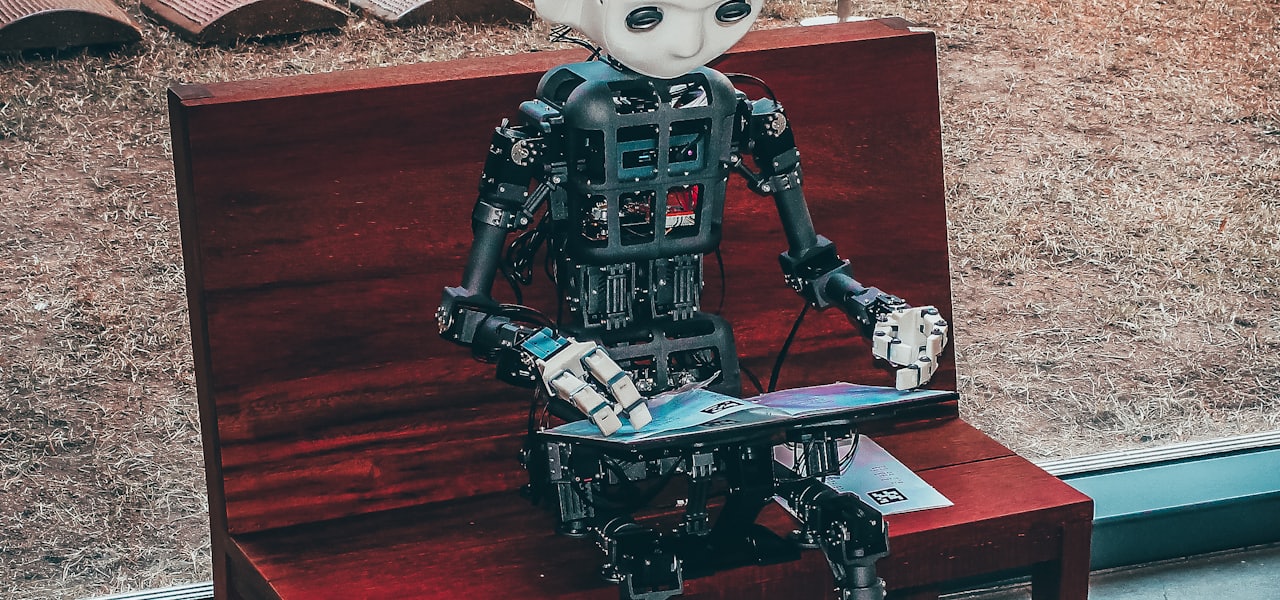
Pieter "Peter" Adriaan Flach (born 8 April 1961, Sneek) is a Dutch computer scientist and a Professor of Artificial Intelligence in the Department of Computer Science at the University of Bristol. He is author of the acclaimed Simply Logical: Intelligent Reasoning by Example (John Wiley, 1994) and Machine Learning: the Art and Science of Algorithms that Make Sense of Data (Cambridge University Press, 2012). == Education == Flach received an MSc Electrical Engineering from Universiteit Twente in 1987 and a PhD in Computer Science from Tilburg University in 1995. == Research == Flach's research interests are in data mining and machine learning.
Hard sigmoid
In artificial intelligence, especially computer vision and artificial neural networks, a hard sigmoid is non-smooth function used in place of a sigmoid function. These retain the basic shape of a sigmoid, rising from 0 to 1, but using simpler functions, especially piecewise linear functions or piecewise constant functions. These are preferred where speed of computation is more important than precision. == Examples == The most extreme examples are the sign function or Heaviside step function, which go from −1 to 1 or 0 to 1 (which to use depends on normalization) at 0. Other examples include the Theano library, which provides two approximations: ultra_fast_sigmoid, which is a multi-part piecewise approximation and hard_sigmoid, which is a 3-part piecewise linear approximation (output 0, line with slope 0.2, output 1).
Fuzzy relation
A fuzzy relation is the cartesian product of mathematical fuzzy sets. Two fuzzy sets are taken as input, the fuzzy relation is then equal to the cross product of the sets which is created by vector multiplication. Usually, a rule base is stored in a matrix notation which allows the fuzzy controller to update its internal values. From a historical perspective, the first fuzzy relation was mentioned in the year 1971 by Lotfi A. Zadeh. A practical approach to describe a fuzzy relation is based on a 2d table. At first, a table is created which consists of fuzzy values from 0..1. The next step is to apply the if-then-rules to the values. The resulting numbers are stored in the table as an array. Fuzzy relations can be utilized in fuzzy databases.
Belief–desire–intention software model
The belief–desire–intention software model (BDI) is a software model developed for programming intelligent agents. Superficially characterized by the implementation of an agent's beliefs, desires and intentions, it actually uses these concepts to solve a particular problem in agent programming. In essence, it provides a mechanism for separating the activity of selecting a plan (from a plan library or an external planner application) from the execution of currently active plans. Consequently, BDI agents are able to balance the time spent on deliberating about plans (choosing what to do) and executing those plans (doing it). A third activity, creating the plans in the first place (planning), is not within the scope of the model, and is left to the system designer and programmer. == Overview == In order to achieve this separation, the BDI software model implements the principal aspects of Michael Bratman's theory of human practical reasoning (also referred to as Belief-Desire-Intention, or BDI). That is to say, it implements the notions of belief, desire and (in particular) intention, in a manner inspired by Bratman. For Bratman, desire and intention are both pro-attitudes (mental attitudes concerned with action). He identifies commitment as the distinguishing factor between desire and intention, noting that it leads to (1) temporal persistence in plans and (2) further plans being made on the basis of those to which it is already committed. The BDI software model partially addresses these issues. Temporal persistence, in the sense of explicit reference to time, is not explored. The hierarchical nature of plans is more easily implemented: a plan consists of a number of steps, some of which may invoke other plans. The hierarchical definition of plans itself implies a kind of temporal persistence, since the overarching plan remains in effect while subsidiary plans are being executed. An important aspect of the BDI software model (in terms of its research relevance) is the existence of logical models through which it is possible to define and reason about BDI agents. Research in this area has led, for example, to the axiomatization of some BDI implementations, as well as to formal logical descriptions such as Anand Rao and Michael Georgeff's BDICTL. The latter combines a multiple-modal logic (with modalities representing beliefs, desires and intentions) with the temporal logic CTL. More recently, Michael Wooldridge has extended BDICTL to define LORA (the Logic Of Rational Agents), by incorporating an action logic. In principle, LORA allows reasoning not only about individual agents, but also about communication and other interaction in a multi-agent system. The BDI software model is closely associated with intelligent agents, but does not, of itself, ensure all the characteristics associated with such agents. For example, it allows agents to have private beliefs, but does not force them to be private. It also has nothing to say about agent communication. Ultimately, the BDI software model is an attempt to solve a problem that has more to do with plans and planning (the choice and execution thereof) than it has to do with the programming of intelligent agents. This approach has recently been proposed by Steven Umbrello and Roman Yampolskiy as a means of designing autonomous vehicles for human values. == BDI agents == A BDI agent is a particular type of bounded rational software agent, imbued with particular mental attitudes, viz: Beliefs, Desires and Intentions (BDI). === Architecture === This section defines the idealized architectural components of a BDI system. Beliefs: Beliefs represent the informational state of the agent–its beliefs about the world (including itself and other agents). Beliefs can also include inference rules, allowing forward chaining to lead to new beliefs. Using the term belief rather than knowledge recognizes that what an agent believes may not necessarily be true (and in fact may change in the future). Beliefset: Beliefs are stored in database (sometimes called a belief base or a belief set), although that is an implementation decision. Desires: Desires represent the motivational state of the agent. They represent objectives or situations that the agent would like to accomplish or bring about. Examples of desires might be: find the best price, go to the party or become rich. Goals: A goal is a desire that has been adopted for active pursuit by the agent. Usage of the term goals adds the further restriction that the set of active desires must be consistent. For example, one should not have concurrent goals to go to a party and to stay at home – even though they could both be desirable. Intentions: Intentions represent the deliberative state of the agent – what the agent has chosen to do. Intentions are desires to which the agent has to some extent committed. In implemented systems, this means the agent has begun executing a plan. Plans: Plans are sequences of actions (recipes or knowledge areas) that an agent can perform to achieve one or more of its intentions. Plans may include other plans: my plan to go for a drive may include a plan to find my car keys. This reflects that in Bratman's model, plans are initially only partially conceived, with details being filled in as they progress. Events: These are triggers for reactive activity by the agent. An event may update beliefs, trigger plans or modify goals. Events may be generated externally and received by sensors or integrated systems. Additionally, events may be generated internally to trigger decoupled updates or plans of activity. BDI was also extended with an obligations component, giving rise to the BOID agent architecture to incorporate obligations, norms and commitments of agents that act within a social environment. === BDI interpreter === This section defines an idealized BDI interpreter that provides the basis of SRI's PRS lineage of BDI systems: initialize-state repeat options: option-generator (event-queue) selected-options: deliberate(options) update-intentions(selected-options) execute() get-new-external-events() drop-unsuccessful-attitudes() drop-impossible-attitudes() end repeat === Limitations and criticisms === The BDI software model is one example of a reasoning architecture for a single rational agent, and one concern in a broader multi-agent system. This section bounds the scope of concerns for the BDI software model, highlighting known limitations of the architecture. Learning: BDI agents lack any specific mechanisms within the architecture to learn from past behavior and adapt to new situations. Three attitudes: Classical decision theorists and planning research questions the necessity of having all three attitudes, distributed AI research questions whether the three attitudes are sufficient. Logics: The multi-modal logics that underlie BDI (that do not have complete axiomatizations and are not efficiently computable) have little relevance in practice. Multiple agents: In addition to not explicitly supporting learning, the framework may not be appropriate to learning behavior. Further, the BDI model does not explicitly describe mechanisms for interaction with other agents and integration into a multi-agent system. Explicit goals: Most BDI implementations do not have an explicit representation of goals. Lookahead: The architecture does not have (by design) any lookahead deliberation or forward planning. This may not be desirable because adopted plans may use up limited resources, actions may not be reversible, task execution may take longer than forward planning, and actions may have undesirable side effects if unsuccessful. == BDI agent implementations == === 'Pure' BDI === Procedural Reasoning System (PRS) IRMA (not implemented but can be considered as PRS with non-reconsideration) UM-PRS OpenPRS Distributed Multi-Agent Reasoning System (dMARS) AgentSpeak(L) – see Jason below AgentSpeak(RT) Agent Real-Time System (ARTS) (ARTS) JAM JACK Intelligent Agents JADEX (open source project) JaKtA JASON GORITE SPARK 3APL 2APL GOAL agent programming language CogniTAO (Think-As-One) Living Systems Process Suite PROFETA Gwendolen (Part of the Model Checking Agent Programming Languages Framework) === Extensions and hybrid systems === JACK Teams CogniTAO (Think-As-One) Living Systems Process Suite Brahms JaCaMo
Blended artificial intelligence
Blended artificial intelligence (blended AI) refers to the blending of different artificial intelligence techniques or approaches to achieve more robust and practical solutions. It involves integrating multiple AI models, algorithms, and technologies to leverage their respective strengths and compensate for their weaknesses. == Background == In the context of machine learning, blended AI can involve using different types of models, such as generative AI, decision trees, neural networks, and support vector machines. By combining their results, predictions are more accurate and reliable. This blending of models can be done through techniques like ensemble learning, where multiple models are trained independently and their predictions are combined to make a final decision. Blended AI can also involve combining different AI techniques or technologies, such as natural language processing, computer vision, and expert systems, to tackle complex problems that require a multi-dimensional approach. For example, in a sales scenario AI could be used for lead generation and gathering information from social media such as LinkedIn posts, or understanding a prospect's hobbies and interests. Another blended AI could achieve customer profiling including past interactions and purchasing habits, by them, their industry and growth areas. Blended AI could be used to do predictive analytics to look at historical sales data, market trends, and external factors to generate accurate sales forecasts. This method is critical to gauge and increase "efficiency, revenue, and productivity". Lastly, another could integrate all the information into the CRM to build and maintain better prospect and customer profiles. Blended AI aims to leverage the strengths of different AI techniques and technologies, allowing them to complement each other and create more powerful and comprehensive AI solutions. By combining multiple approaches, blended AI aims to achieve better performance, higher accuracy, improved robustness, and enhanced capabilities in solving diverse and challenging problems.
Leakage (machine learning)
In statistics and machine learning, leakage (also known as data leakage or target leakage) refers to the use of information during model training that would not be available at prediction time. This results in overly optimistic performance estimates, as the model appears to perform better during evaluation than it actually would in a production environment. Leakage is often subtle and indirect, making it difficult to detect and eliminate. It can lead a statistician or modeler to select a suboptimal model, which may be outperformed by a leakage-free alternative. == Leakage modes == Leakage can occur at multiple stages of the machine learning workflow. Broadly, its sources can be divided into two categories: those arising from features and those arising from training examples. === Feature leakage === Feature or column-wise leakage is caused by the inclusion of columns which are one of the following: a duplicate label, a proxy for the label, or the label itself. These features, known as anachronisms, will not be available when the model is used for predictions, and result in leakage if included when the model is trained. For example, including a "MonthlySalary" column when predicting "YearlySalary"; or "MinutesLate" when predicting "IsLate". === Training example leakage === Row-wise leakage is caused by improper sharing of information between rows of data. Types of row-wise leakage include: Premature featurization; leaking from premature featurization before Cross-validation/Train/Test split (must fit MinMax/ngrams/etc on only the train split, then transform the test set) Duplicate rows between train/validation/test (for example, oversampling a dataset to pad its size before splitting; or, different rotations/augmentations of a single image; bootstrap sampling before splitting; or duplicating rows to up sample the minority class) Non-independent and identically distributed random (non-IID) data Time leakage (for example, splitting a time-series dataset randomly instead of newer data in test set using a train/test split or rolling-origin cross-validation) Group leakage—not including a grouping split column (for example, Andrew Ng's group had 100k x-rays of 30k patients, meaning ~3 images per patient. The paper used random splitting instead of ensuring that all images of a patient were in the same split. Hence the model partially memorized the patients instead of learning to recognize pneumonia in chest x-rays.) A 2023 review found data leakage to be "a widespread failure mode in machine-learning (ML)-based science", having affected at least 294 academic publications across 17 disciplines, and causing a potential reproducibility crisis. == Detection == Data leakage in machine learning can be detected through various methods, focusing on performance analysis, feature examination, data auditing, and model behavior analysis. Performance-wise, unusually high accuracy or significant discrepancies between training and test results often indicate leakage. Inconsistent cross-validation outcomes may also signal issues. Feature examination involves scrutinizing feature importance rankings and ensuring temporal integrity in time series data. A thorough audit of the data pipeline is crucial, reviewing pre-processing steps, feature engineering, and data splitting processes. Detecting duplicate entries across dataset splits is also important. For language models, the Min-K% method can detect the presence of data in a pretraining dataset. It presents a sentence suspected to be present in the pretraining dataset, and computes the log-likelihood of each token, then compute the average of the lowest K of these. If this exceeds a threshold, then the sentence is likely present. This method is improved by comparing against a baseline of the mean and variance. Analyzing model behavior can reveal leakage. Models relying heavily on counter-intuitive features or showing unexpected prediction patterns warrant investigation. Performance degradation over time when tested on new data may suggest earlier inflated metrics due to leakage. Advanced techniques include backward feature elimination, where suspicious features are temporarily removed to observe performance changes. Using a separate hold-out dataset for final validation before deployment is advisable.
Constructive cooperative coevolution
The constructive cooperative coevolutionary algorithm (also called C3) is a global optimisation algorithm in artificial intelligence based on the multi-start architecture of the greedy randomized adaptive search procedure (GRASP). It incorporates the existing cooperative coevolutionary algorithm (CC). The considered problem is decomposed into subproblems. These subproblems are optimised separately while exchanging information in order to solve the complete problem. An optimisation algorithm, usually but not necessarily an evolutionary algorithm, is embedded in C3 for optimising those subproblems. The nature of the embedded optimisation algorithm determines whether C3's behaviour is deterministic or stochastic. The C3 optimisation algorithm was originally designed for simulation-based optimisation but it can be used for global optimisation problems in general. Its strength over other optimisation algorithms, specifically cooperative coevolution, is that it is better able to handle non-separable optimisation problems. An improved version was proposed later, called the Improved Constructive Cooperative Coevolutionary Differential Evolution (C3iDE), which removes several limitations with the previous version. A novel element of C3iDE is the advanced initialisation of the subpopulations. C3iDE initially optimises the subpopulations in a partially co-adaptive fashion. During the initial optimisation of a subpopulation, only a subset of the other subcomponents is considered for the co-adaptation. This subset increases stepwise until all subcomponents are considered. This makes C3iDE very effective on large-scale global optimisation problems (up to 1000 dimensions) compared to cooperative coevolutionary algorithm (CC) and Differential evolution. The improved algorithm has then been adapted for multi-objective optimization. == Algorithm == As shown in the pseudo code below, an iteration of C3 exists of two phases. In Phase I, the constructive phase, a feasible solution for the entire problem is constructed in a stepwise manner. Considering a different subproblem in each step. After the final step, all subproblems are considered and a solution for the complete problem has been constructed. This constructed solution is then used as the initial solution in Phase II, the local improvement phase. The CC algorithm is employed to further optimise the constructed solution. A cycle of Phase II includes optimising the subproblems separately while keeping the parameters of the other subproblems fixed to a central blackboard solution. When this is done for each subproblem, the found solution are combined during a "collaboration" step, and the best one among the produced combinations becomes the blackboard solution for the next cycle. In the next cycle, the same is repeated. Phase II, and thereby the current iteration, are terminated when the search of the CC algorithm stagnates and no significantly better solutions are being found. Then, the next iteration is started. At the start of the next iteration, a new feasible solution is constructed, utilising solutions that were found during the Phase I of the previous iteration(s). This constructed solution is then used as the initial solution in Phase II in the same way as in the first iteration. This is repeated until one of the termination criteria for the optimisation is reached, e.g. a maximum number of evaluations. {Sphase1} ← ∅ while termination criteria not satisfied do if {Sphase1} = ∅ then {Sphase1} ← SubOpt(∅, 1) end if while pphase1 not completely constructed do pphase1 ← GetBest({Sphase1}) {Sphase1} ← SubOpt(pphase1, inext subproblem) end while pphase2 ← GetBest({Sphase1}) while not stagnate do {Sphase2} ← ∅ for each subproblem i do {Sphase2} ← SubOpt(pphase2,i) end for {Sphase2} ← Collab({Sphase2}) pphase2 ← GetBest({Sphase2}) end while end while == Multi-objective optimisation == The multi-objective version of the C3 algorithm is a Pareto-based algorithm which uses the same divide-and-conquer strategy as the single-objective C3 optimisation algorithm . The algorithm again starts with the advanced constructive initial optimisations of the subpopulations, considering an increasing subset of subproblems. The subset increases until the entire set of all subproblems is included. During these initial optimisations, the subpopulation of the latest included subproblem is evolved by a multi-objective evolutionary algorithm. For the fitness calculations of the members of the subpopulation, they are combined with a collaborator solution from each of the previously optimised subpopulations. Once all subproblems' subpopulations have been initially optimised, the multi-objective C3 optimisation algorithm continues to optimise each subproblem in a round-robin fashion, but now collaborator solutions from all other subproblems' subspopulations are combined with the member of the subpopulation that is being evaluated. The collaborator solution is selected randomly from the solutions that make up the Pareto-optimal front of the subpopulation. The fitness assignment to the collaborator solutions is done in an optimistic fashion (i.e. an "old" fitness value is replaced when the new one is better). == Applications == The constructive cooperative coevolution algorithm has been applied to different types of problems, e.g. a set of standard benchmark functions, optimisation of sheet metal press lines and interacting production stations. The C3 algorithm has been embedded with, amongst others, the differential evolution algorithm and the particle swarm optimiser for the subproblem optimisations.